(Interview with Dr. Sadiq from 22nd of September 2025 by Louise Potterton)
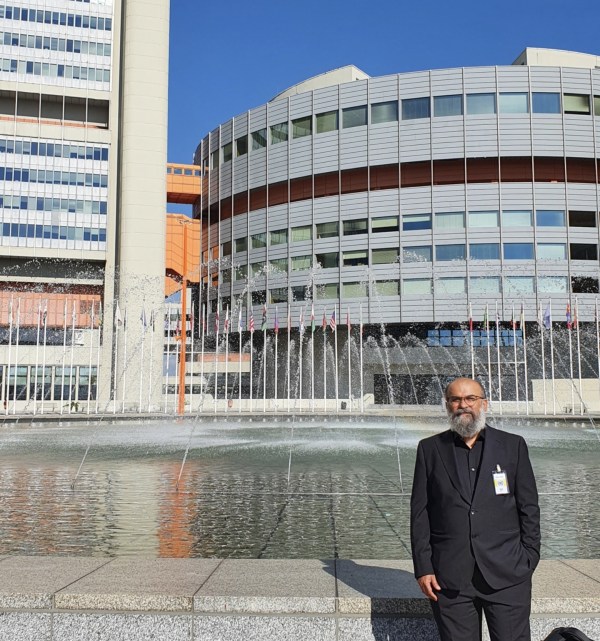
Autism and Attention Deficit Hyperactivity Disorder (ADHD) are common, lifelong neurodevelopmental conditions that affect the way people behave, think, and interact with others. Just over a decade ago, it was thought that a diagnosis of one ruled out the existence of the other. Today, a growing number of medical experts and neurodiversity advocates believe that both autism and ADHD can co-exist, despite their contradictory characteristics. One of these experts is Dr Khurram Sadiq. The London-based psychiatrist, who has been diagnosed with both conditions, is calling for greater understanding of their co-occurrence –known as AuDHD.
In layperson terms, what is neurodiversity?
Basically, it means that your brain is wired differently. A neurodivergent person’s brain communicates with other parts of the brain in a very different way as to what is perceived as ‘typical’. Therefore, this person has different perspectives. As a result, neurodivergent people might have some difficulties, but at the same time they can provide outlooks that people might not have considered before. The neurodiversity movement does not view neurodevelopmental conditions as disabilities. Conditions like autism, ADHD, dyslexia and Tourette‘s Syndrome are about differences in the brains. They are not disabilities but can be disabling if they are having an impact on daily life, work and interpersonal relationships. It is important to note that what some neurodivergent people see as difficulties others see as strengths.
So is neurodiversity the opposite of neurotypical?
Yes, if we look at the population, the neurodivergent population is considered to be about 10 percent, so the neurotypical population is 90 percent. Neurotypical means the brain functions in a way that is considered the norm in society. In general, neurotypical people can do things in a uniform way. They are able to follow rules and patterns. Whereas with neurodivergent people, they find it difficult to conform. They are different and do things in a different way from neurotypical people, but their ways can also be amazing. Sadly, being different can lead to challenges in daily life, at school or college, and in the workplace. The world has become a place where there are systems for doing things, applying things and thinking about things without looking at different perspectives. Just going through the motions has become the norm. Because 90 percent of the population are considered neurotypical, rules and regulations are made by and for neurotypical people.
Are the most common conditions associated with neurodiversity autism and attention deficit and hyperactivity disorder?
The most common neurodevelopmental condition is ADHD. There is a prevalence of about six to ten percent of the population, and this refers to diagnosed people. We are not considering here the undiagnosed people. With autism. recent figures show that around one in thirty-four people are on the autistic spectrum. Then if you look at the whole spectrum of neurodevelopmental conditions, you will not see them sitting in silos. There will be issues with dyslexia, which will overlap with ADHD, and issues with dyspraxia that will overlap with autism. I am seeing more patients now who have got all four of those conditions, some mild, some more severe.
Autism and AHDH appear to be very different types of conditions – with one characterized with order and routine and the other chaos and impulsiveness. But can they exist together?
Absolutely. The latest figures suggest that between 60 and 70 percent of people who have a neurodevelopmental condition actually have an overlap of autism and ADHD. This is now known as AuDHD, although it is not yet a formal classification. Before 2013, we could not even diagnose the co-existence of both these conditions, because the diagnostic criteria in internationally recognized manuals prevented doctors and researchers from describing autism and ADHD as conditions that could occur together. Ideally, qualified doctors should be able to offer a dual diagnosis and guidance on how to best manage it. We need to acknowledge the unique challenges faced by individuals who have both autism and ADHD. This will lead to more effective treatments, more inclusive schools and workplaces.
Considering the contradictions, how does AuDHD present itself?
Autism is like a parent to ADHD. It does not let it be too disorganized and anarchic. Whereas ADHD is like a friend to autism, it does not let it be too reclusive. What I am trying to say is in people with AuDHD, the ADHD traits are not as severe as those with pure ADHD, who can be severely impulsive. And then you have got your autistic counterpart, sitting on the opposite spectrum, who is very reclusive and does not want to come out and socialize. But when you look at people with AuDHD, so with both conditions, they are not as disorganized as those with pure ADHD, and they are not as reclusive as those with the single diagnosis of autism. It is as if they have two different parts of the brain. They like to be organized, but they cannot be organized. They like silence, but at other times they like noise as well. They like novelty, but they like sameness.
If AuDHD is more difficult to diagnose, could there be a lot of people who are just struggling with this condition, and it’s being overlooked?
Yes a lot of people are in this situation. I have come across three different presentations of AuDHD. One type is autism-prominent, another ADHD-prominent, and then there is another type, which is kind of variable and switches from the autistic brain to the ADHD brain. With this third type a person can present as autistic and sometimes as ADHD. This makes AuDHD more difficult to recognize than when just one of the conditions is present. There are a lot of people on the autistic spectrum who also have ADHD. But they might not be diagnosed as being autistic because the condition is not as evident as in people who just have autism. The same with the ADHD, it may not be diagnosed because it is masked by the autism condition and does not present itself like with pure ADHD. Even in the neurodivergent world, AuDHD is a new entity. So it is difficult for medical professionals to diagnose it and even people active in the neurodevelopment community and those with both conditions have difficulty identifying it too. Only through listening to people, will we learn how living with AuDHD is different from having autism or ADHD as a single diagnosis.
With the introduction of AuDHD into the mix of neurodevelopmental conditions, will this now slow down progress with regards to the neurodiversity movement?
It will slow things down, but it will make people think about AuDHD. I remember the first time when I spoke about AuDHD in 2022, there was very little material available. I started doing joint assessments of my patients and made observations about the issues they were experiencing. These could not be explained by autism or ADHD alone but were in fact because the patient has both conditions, therefore AuDHD. With some patients who I diagnose with AuDHD, there is great relief when I explain it to them. Many have been looking for answers for a long time and have been to several psychiatrists. They have lived their lives feeling that they do not fit neatly into the categories of autism or ADHD despite maybe having a diagnosis for one of these conditions. A dual diagnosis can give them clarity, and a proper treatment plan can be developed. They realize that their struggles are not isolated or unrelated but rather the result of unique combination of both traits. Of course, it is difficult for some patients to accept, but at least they have an insight into the way their brains function.
What are the strengths that neurodiverse people can bring to the workplace?
They are very honest and hard working. They bring different perspectives on work processes and can look at things from a completely different angle. They have developed their own shortcuts and systems where they can be efficient in a short span of time. They are creative, innovative and they have energy. People with ADHD excel in times of crisis. If you need something done at the last minute, then they will get it done. People with autism have great attention to detail.
How can organizations attract and keep people who are neurodiverse?
It is disheartening to observe that many companies still fail to recognize the potential of neurodiverse talent. I think that the first thing is to convince senior management that hiring neurodiverse staff is something that will be beneficial. Slowly, it is getting better, and things are gradually changing, but not to the extent that we would like. Everything starts with education and the understanding that neurodiversity is not bad thing. More companies need to recognize that neurodiversity is a powerful asset, and that when it is properly understood and supported, it can drive success. Application forms need to be adapted to give more options for people to be open about neurodiversity without fear of discrimination. Most people are reluctant to let a future or current employer know that they are neurodivergent. I am constantly being asked by my patients whether they should disclose their neurodiversity to their employer. I say if their employer is somebody who considers differences to be bonuses and strengths, and if the organization is inclusive, then yes they should tell them.
Many companies offer managers and human resources professionals training on bullying, discrimination and sexual harassment. Should there also be specific courses on neurodiversity?
Yes I think there should be courses. Unfortunately today a lot of training is online and not in person. When a course is in person, you can ask questions and interact with other participants, everything is visible. With online courses, you’re distracted and doing other tasks. Some people don’t even read the information and just do the courses because it is part of their induction. If such training is implemented, it should not just be a tick-the-box exercise. You might read about a neurodivergent person, but unless you have seen and worked with a person with autism or ADHD, you will not understand the challenges they may face and the benefits they can bring. Companies should offer placements for neurodiverse people so that staff can learn firsthand.
What are the types of accommodation that could be made for a neurodiverse person to thrive in a traditional workplace?
There are several measures that can be implemented. For example, if the person cannot work in a noisy environment and is easily distracted, they should have their own room, or they should be allowed to work from home at least a couple of days a week. If this is not possible, then they should be given noise cancellation headphones. If there are sensory issues, then the type of lighting in a room or on a computer needs to be considered. Other senses such as touch and smell can become overloaded and can lead to distress and distraction and should also be considered. Employees with ADHD should not be unfairly criticized for their difficulty with traditional time management, lack of focus in meetings and need for clarity. Instead they should be supported with tailored tools and strategies that play to their strengths, such as creativity and hyperfocus.
 UN DIN